
🏴 Husayni Mourning Around the World
🌐 Uzbekistan:
Ashura International Foundation / Husayni Mourning Around the World News – September 26, 2024:
Uzbekistan is one of the countries of Central Asia, sharing borders with Afghanistan, Tajikistan, Kyrgyzstan, and Kazakhstan. It has a population of approximately 31.5 million people, more than 85 percent of whom are Muslims.
The majority of Uzbekistan’s population consists of Sunni Muslims who follow the Hanafi school of thought. The exact number of Shiites in Uzbekistan is not known, although it is estimated at around 1.5 million. The principal Shiite-populated cities include Samarkand, Bukhara, Zirabad (a district of Bukhara), Tashkent, Jizzakh, Navoi, Khwarazm, Qashqadaryo, and Syrdarya.
During the first ten days of Muharram, especially on the day of Ashura, Shiites (primarily people of Iranian origin and Tajiks), along with some Sunnis, commemorate Imam Husayn (a.s.) in the cities of Samarkand, Bukhara, Khwarazm, Fergana, and Jizzakh, mourning his martyrdom and grieving for him and his family. In addition to Shiites, who are committed to attending mourning gatherings and providing food, Sunni men and women also participate in these ceremonies and even contribute financially to support the organization of mourning gatherings.
The mourning ceremonies for Imam Husayn (a.s.) are held with great solemnity in mosques and Husseiniyyahs in Bukhara, at the Ahl al-Bayt mosques in Samarkand, as well as in the outskirts of Tashkent and other areas.
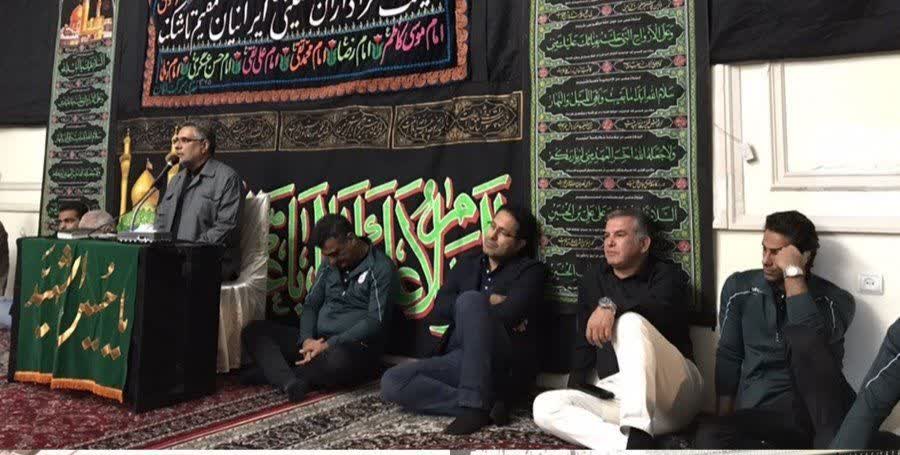
In different parts of the country, the observance of Muharram has become a popular religious tradition and includes a variety of ceremonies. During this month, mosques and Husseiniyyahs are decorated with black banners and fabrics. Men and women gather in mosques and Husseiniyyahs to listen to religious sermons, elegiac poetry, and lamentations while taking part in mourning ceremonies. Mourning processions, in which men perform chest-beating and chain-beating rituals, are also among the traditions of Muharram. Shiite communities of Iranian origin and Tajik background, through their profound devotion to Imam Husayn (a.s.) and the enduring message of martyrdom, have played a direct role in preserving and transmitting Ashura traditions in Uzbekistan.
Most Shiites live in Bukhara and Samarkand, and the majority speak Persian-Tajik. Another Shiite community consists of ethnic Azerbaijanis who were deported to the region from Soviet Azerbaijan during the Stalin era. The relationship between Shiites and Sunnis in the countries of Central Asia, including Uzbekistan, differs significantly from that of many other Muslim countries, as the two communities generally maintain closer relations. Many Sunnis in Uzbekistan have deep affection for the Ahl al-Bayt (a.s.). They respect the Rightly Guided Caliphs while also expressing profound devotion to Imam Ali (a.s.) and Imam Husayn (a.s.), and they respectfully refer to Lady Fatimah (a.s.) as “Bibi Fatimah.” It is common for Sunni Uzbeks to be moved by mourning ceremonies, elegies, and gatherings of grief, joining the mourners in expressing their sorrow. Husseiniyyahs have also been established in Samarkand and Bukhara, where mourning ceremonies are regularly held.
The history of mourning for Imam Husayn (a.s.) in the region of Turkestan, which includes present-day Uzbekistan, dates back to the third century AH. During that period, groups from Khorasan migrated to the region and settled in Bukhara and Khiva in the early third century, where they established commemorations for Imam Husayn (a.s.). At that time, mourning gatherings were held secretly in private homes. However, following the collapse of the Soviet Union, these ceremonies became openly permitted. Today, Husayni mourning ceremonies are held on a large scale in Turkmenistan, Kazakhstan, Azerbaijan, and Uzbekistan, with strong participation from Sunni Muslims as well. Although at certain times Wahhabi groups have attempted to obstruct these ceremonies through various means, over time these commemorations have contributed to enriching the culture of Shiism, while religious scholars, writers, and poets have continued to honor and preserve the legacy of Muharram.
Short link
Questions and Comments