🏴 Husayni Mourning Around the World
🌐 Turkmenistan:
Ashura International Foundation / Husayni Mourning News – January 31, 2007:
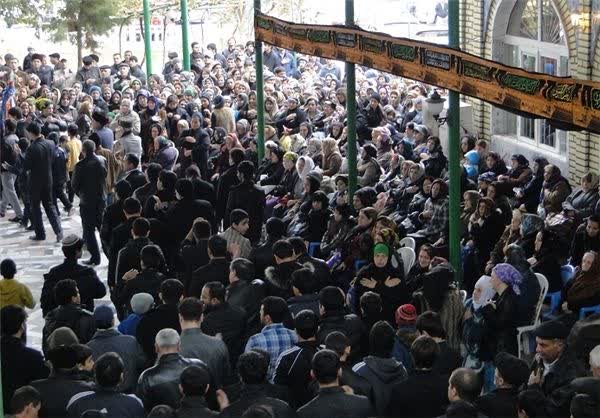
The Shiite mosques of Turkmenistan, especially the “Imam Reza (a.s.) Mosque” in Ashgabat, are filled during Muharram, particularly on the nights of Tasu’a and Ashura, and on the third and seventh nights of the martyrdom of Imam Husayn (a.s.), with crowds of the devotees of the AhlulBayt (a.s.) from various linguistic backgrounds including Azeri, Kurdish, Turkmen, and Persian.
This is while Husayni mourners in Turkmenistan had not been able to hold Muharram ceremonies openly for over 70 years; for this reason, the ceremonies were held in homes, and secretly. However, with the country’s independence, Azeri, Afghan, Iranian, and Turkmen women, men, children, and adolescents residing in Turkmenistan gather together in Shiite mosques to mourn. Azeris residing in Ashgabat say that mourning rituals were held in a disorganized manner at the beginning of independence, with men and women mourning together in mixed gatherings in the mosques.
Currently, a small number of women are seen in Shiite mosques who are without hijab or do not mind their scarves falling in front of men. Nevertheless, with the recommendations of the Cultural Attaché’s officials, as well as the installation of a metal partition between women and men inside the “Imam Reza (a.s.) Mosque,” the mixing of men and women during mourning has been prevented since this year.
Carrying out cultural activities to obligate Shiite men and women to observe religious regulations in this country requires a great deal of time. However, officials of the Cultural Attaché of the Embassy of the Islamic Republic of Iran in Turkmenistan consider this feasible and state that the Attaché has undertaken extensive measures for conducting Quran classes.
It is worth noting that currently a number of Turkmen youth and adolescents have learned the Quran well in Sunni mosques, but unfortunately, this has been less common among Azeri Shiite youth and adolescents. Nevertheless, there are many talents for teaching the Quran and its concepts among Shiite male and female youth and adolescents in Turkmenistan. Unfortunately, at present, most Shiite youth and adolescents in Turkmenistan only carry the name of being Shiite, while they have no knowledge of religious matters or even of the Imams. Azeri women and girls in Turkmenistan also fare much worse in terms of moral issues compared to Turkmen women and girls.
In any case, the days of Muharram and the holy month of Ramadan are the best opportunities for teaching religious matters and the Quran to the Shiites of Turkmenistan, as during these days the government of this country imposes fewer obstacles to the religious education of Shiite youth and adolescents. Nevertheless, for carrying out religious activities in Turkmenistan, a proper short-term, medium-term, and long-term plan is needed from those responsible for cultural affairs of the Islamic Republic of Iran in this country. It seems that the education of Shiite male and female youth and adolescents in Turkmenistan in mourning matters should be carried out with purposeful planning during Muharram and the holy month of Ramadan. Of course, any religious activity in Turkmenistan, given the country’s sensitivity in this regard, requires special delicacy, and it seems that the best approach would be for the management of the “Imam Reza (a.s.) Mosque” in Ashgabat to be entrusted in the future to trained Azeri individuals.
Short link
Questions and Comments