🏴 Husayni Mourning Around the World – 2026
🌐 Pakistan:
Ashura International Foundation / Husayni Mourning News:
Pakistan’s Shiites, by attending Imam Bargahs (Husayniyyahs) and Islamic centers across the country, have begun preparations for mourning gatherings for Imam Hussein (a.s.), the Master of Martyrs, and his 72 loyal companions.
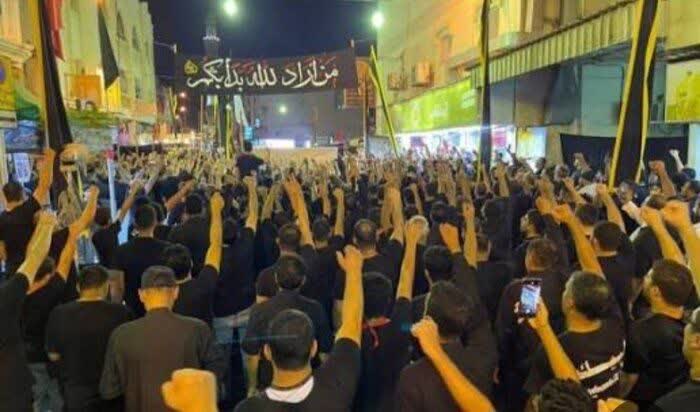
During these days, Pakistan’s Shiites engage in elegy recitation, chest-beating, and chain-beating every day and night, and the mourning rituals for the martyrs of Karbala will reach their peak on the days of Tasu’a and Ashura.
Devotees of Sayyed al-Shuhada (a.s.) (the Master of Martyrs) in Pakistan, by draping black over Shiite gathering centers in grief over the heartbreaking martyrdom of Imam Hussein (a.s.), have prepared themselves for mourning until the evening of the third day after Ashura (Sham-e Ghariban) and will continue mourning gatherings until the 7th of Rabi’ al-Awwal.
Mourning processions will also take place on Tasu’a and Ashura in the main streets of various Pakistani cities, including Islamabad, Rawalpindi, Lahore, Peshawar, Skardu, Gilgit, Karachi, Quetta, Hyderabad, Muzaffarabad, Jhang, Mianwali, Larkana, Faisalabad, Sargodha, Chakwal, and Kashmir, under the supervision of the Pakistani government.
Iranian residents of Islamabad and other Pakistani cities, with the start of Muharram, have also established mourning gatherings in grief over the heartbreaking martyrdom of the third Imam of the Shiites, Sayyed al-Shuhada (a.s.) (the Master of Martyrs), joining tens of millions of their compatriots in the Islamic homeland in performing mourning rituals during these sorrowful days.
Mourning ceremonies, elegy recitation, chest-beating, Rawda-khwani (eulogy recitation), and the prayer of Ziyarat Ashura are being held during the first ten days of Muharram at the Husayniyyah of the Embassy of the Islamic Republic of Iran in the Pakistani capital, as well as at other Iranian diplomatic missions in various Pakistani cities, with the enthusiastic presence of Iranian families.
Pakistan’s political leaders also annually issue messages on the eve of Ashura during Muharram, stating that Muharram commemorates the sacrifice and devotion of Imam Hussein (a.s.) at Karbala and proves that nothing is superior for Muslims than following the teachings of Islam. This message is issued and emphasized annually by Pakistan’s highest-ranking officials.
Senior leaders of Shiite parties and organizations in Pakistan have also called on the government and legal-security institutions of Pakistan, regarding the provision of security measures for Husayni mourning across all regions of the country, to implement security measures during Muharram and take action against terrorist groups seeking to create an atmosphere of violence and conflict during these days.
Pakistan’s Shiite scholars have announced that Muharram rituals in Pakistan will be held with the same fervor as in previous years.
Security remains the primary concern for Pakistan’s Shiites every year, especially during Muharram and other special religious occasions. Shiites make up over 20 percent of Pakistan’s population of more than 200 million.
Government officials have ordered all regional and provincial authorities to implement security plans to protect mourning gatherings, ceremonies, and chest-beating processions during Muharram and to prevent any untoward incidents during the mourning rituals.
Militants affiliated with extremist and terrorist groups, including the Pakistani Taliban (TTP) and Lashkar-e-Jhangvi, have in past years repeatedly targeted Shiite chest-beating processions and mourning ceremonies during Muharram in various parts of Pakistan, including the cities of Quetta, Lahore, Rawalpindi, Karachi, and Dera Ismail Khan.
In previous years, despite the Pakistani government announcing that it had implemented stringent security measures to ensure the safety of mourning gatherings and ceremonies across the country, terrorist attacks against Shiites during mourning rituals—particularly in Sindh and Balochistan provinces—occurred on the nights of Tasu’a and Ashura.
Pakistan’s most anti-Shiite terrorist groups, known as Lashkar-e-Jhangvi, claimed responsibility for both terrorist attacks against Shiites and Husayni mourners.
The federal government and various provincial governments of Pakistan have also announced plans for special security measures to protect mourning gatherings and ceremonies.
In some Pakistani cities or provinces, authorities impose restrictions on religious ceremonies and the speeches of religious scholars under the pretext of ensuring security. From several days before Muharram begins, restrictions are imposed on the travel of some Pakistani Shiite scholars from their cities to other cities for delivering speeches during Muharram.
Despite the Pakistani government and security and law enforcement agencies’ efforts to prevent terrorist attacks on such religious ceremonies, such events during specific religious occasions—whether holidays or mourning periods—have repeatedly been targeted by deadly terrorist attacks from extremist and terrorist groups in past years.
Short link
Questions and Comments