🏴 Husayni Mourning Around the World – 2026
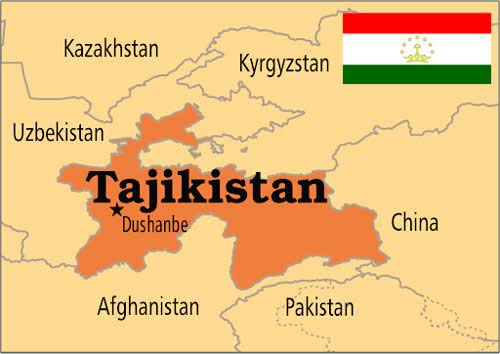
🌐 118. Tajikistan:
Ashura International Foundation / Husayni Mourning News – April 4, 2026:
The people of Tajikistan, culturally, have deep ties with Iran, and their religious customs and traditions are largely consistent with the cultural practices and religious traditions of Iran. For this reason, during the days of Muharram mourning, the Shiites of this country pay special attention to this occasion, particularly on Tasu’a and Ashura, commemorating the uprising of Imam Husayn (a.s.). It is also worth noting that the Sunnis of Tajikistan also hold special respect for the AhlulBayt (a.s.) and the Shiite Imams, especially Imam Husayn (a.s.).
The Isma’ili Shiites of Badakhshan, Tajikistan, hold special respect and devotion toward the AhlulBayt (a.s.), Imam Ali (a.s.), Lady Fatimah (s.a.), and their descendants, and consider Lady Fatimah al-Zahra (s.a.) as their mother. The Isma’ilis of Badakhshan call the months of Muharram and Safar “Shiddah” or “Ashura,” and during this period, they mourn and hold ceremonies, wear black clothing, and all areas of the city are immersed in grief. Men do not shave their beards during these two months and hold mourning ceremonies in their homes.
The people of Badakhshan, Tajikistan, also beat their chests during their mourning rituals, chanting “Ya Hasan, Way Husayn,” and consider the killers of Imam Husayn (a.s.) and his family as the most vile and cruel creatures in existence. “Yazid” in this city is a clear example of a hypocritical and despicable human being, and whenever they wish to refer to someone with such traits, they call them Yazid. Many Sunni Tajiks, during Muharram, pay tribute to the martyrs of Karbala through the ancient ritual of “Karbala-khwani” (recitation of the Karbala tragedy) and fasting in various parts of the country, weeping over the tragedy of Sayyed al-Shuhada (a.s.) (the Master of Martyrs).
“Juma Khan Nabatov,” a professor of philosophy and jurisprudence at the Islamic University of Tajikistan and a well-known researcher, believes that in the primary sources of Hadith, history, biographical evaluation (rijal), and even theology (kalam) of the Sunnis, there are numerous hadiths and narrations regarding the greatness and status of Imam Husayn (a.s.) from the perspective of the Holy Prophet (p.b.u.h.). According to him, history bears witness to the victory of Husayn bin Ali (a.s.)—a victory that blossomed from the crucible of jihad and blood, and conveyed his lofty ideals through the flow of history, generation after generation, to humanity. He described the status of the AhlulBayt (a.s.) and the family of the Prophet (p.b.u.h.) as respected and sacred for Sunni Muslims, and noted that the mere fact that Tajiks, without any religious prejudice, name their children “Ali,” “Fatimah,” “Husayn,” and “Hasan” reflects the utmost sincerity and love of these people for the AhlulBayt of the Prophet (p.b.u.h.).
In some regions of this country, including the Darvaz district in the south and Badakhshan in the east of Tajikistan, special rituals such as Karbala-khwani are held during Muharram. Clerics, including Friday prayer leaders and mosque preachers in Tajikistan, in their Friday sermons leading up to Ashura, mention the virtues of the AhlulBayt (a.s.), recite elegies for the martyrdom of Imam Husayn (a.s.), and offer prayers. Some scholars and devout Tajiks fast during the first ten days of Muharram in remembrance of the thirst and hunger of Imam Husayn’s (a.s.) companions in the desert of Karbala. Elegy recitation for the Karbala event and the martyrdom of Imam Husayn (a.s.) has always been of interest to classical Tajik singers, and people weep upon witnessing these recitations.
Short link
Questions and Comments