🏴 Husayni Mourning Around the World – 2026
🌐 93. Iraq:
Ashura International Foundation / Husayni Mourning News:
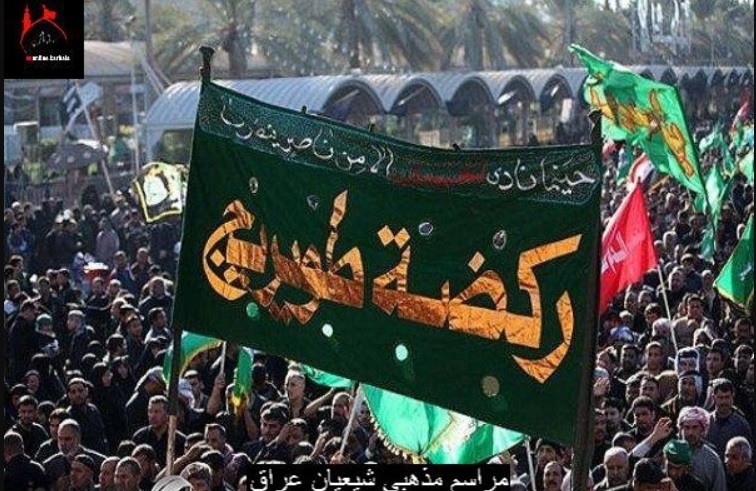
One of the most important of these ceremonies is the mourning on Ashura, during which Shiites hold mourning processions. Through elegy recitation and chest-beating, they commemorate the Karbala event and the martyrdom of Imam Husayn (a.s.) and his companions. These ceremonies begin a month in advance with the preparation of religious and pilgrimage sites and reach their peak on the nights of Muharram.
In addition, passion plays (Ta’ziyeh) and the cooking and distribution of votive food (Nazr) are among other customs of this month. These ceremonies demonstrate the deep cultural and religious bond of the Iraqi people with the values of Ashura and the message of Imam Husayn (a.s.).
*Religious Ceremonies of Iraqi Shiites in Muharram
The mourning rituals in Iraq during Muharram begin with special and magnificent ceremonies. On the first night of Muharram, the replacement of the red flag of the shrine of Imam Husayn (a.s.) with a black flag is one of the most prominent ceremonies of this period. This ceremony, held with the presence of a large number of mourners at the holy shrine of Imam Husayn (a.s.), is recognized as the official announcement of the beginning of Husayni mourning. On the first day of Muharram, mourning delegations (hey’ats) adorn the city of Karbala, holding ceremonies that symbolize the people’s welcoming of Imam Husayn’s (a.s.) caravan. Additionally, refreshment stations are set up in various parts of the city to serve the mourners. Security forces are present to ensure the safety of the mourners.
On the second night of Muharram, a ceremony is held in remembrance of the arrival of Imam Husayn’s (a.s.) caravan to Karbala, in which mourners recall the hardships and bitter events of this tragedy. On the third night of Muharram, mourning processions from various parts of Iraq arrive in Karbala and hold magnificent ceremonies in this holy city, to mourn in honor of Imam Husayn’s (a.s.) uprising and to commemorate these days by attending his shrine.
*Third to Eleventh Nights
On the third day of Muharram, one of the symbolic rituals held in Iraq is the symbolic entry of the caravan of Umar Sa’d into Karbala. In this ceremony, a group of mourners dressed in red and yellow garments, symbolizing the enemies of Imam Husayn (a.s.), perform a passion play (Ta’ziyeh). This caravan reenacts the oppression of Imam Husayn (a.s.) and his companions in memory of the bitter events of the arrival of Umar Sa’d’s army to Karbala. On Ashura, the people of Iraq gather in mosques, Husayniyyahs, and religious sites. Clerics narrate the story of Ashura to them. This day is marked by widespread mourning, chest-beating, and elegy recitation throughout Iraq, especially in the holy cities of Karbala and Najaf.
The eleventh night of Muharram is known as Sham-e Ghariban (the Evening of the Strangers). People light candles to commemorate the loneliness and strangeness of Lady Zaynab (s.a.) and the children of Imam Husayn (a.s.). This ceremony is highly emotional and symbolic, and the grief and sorrow of the martyrdom of the AhlulBayt (a.s.) and the captives of Karbala reach their peak. One of the important customs observed in Iraq during Muharram and until the end of Safar is the preparation and distribution of votive food (Nazr). Delegations and people prepare votive food from the first day of Muharram until Arbaeen and even until the end of Safar, distributing it among the mourners. This practice reaches its peak especially during the first ten days of Muharram and during the days of Arbaeen, as a sign of solidarity with the AhlulBayt (a.s.) and assistance to the mourners.
*Religious Ceremonies of Iraqi Shiites on Arbaeen
The Arbaeen pilgrimage is one of the largest religious ceremonies of Iraqi Shiites. Every year, millions of Shiites from across Iraq and other countries set out toward Karbala to be present at the shrine of Imam Husayn (a.s.) on Arbaeen, the fortieth day after his martyrdom. This ceremony is held with a special spirit of unity and solidarity among Shiites. The Arbaeen pilgrimage begins in early Safar and continues until the 20th of Safar, which coincides with Arbaeen. Every year, with the increasing number of pilgrims, this pilgrimage begins even earlier to ensure pilgrims arrive in Karbala on time.
Among the three main routes leading to Karbala, the Najaf-to-Karbala route is one of the most popular and important. This route holds special significance due to the presence of the shrine of Imam Ali (a.s.) in Najaf. Most Iranian pilgrims choose this route for the pilgrimage. The distance from Najaf to Karbala is approximately 80 kilometers, and completing the entire route on foot takes about 20 to 25 hours. Most pilgrims prefer to begin their walk from the 16th of Safar to arrive in time for the Arbaeen ceremony. Along this route, numerous processions (mawkibs) are set up by the Iraqi people, providing pilgrims with services such as food, water, and free resting places.
*Hawsa Recitation
Hawsa recitation is one of the religious ceremonies of Iraqi Shiites, especially during Arbaeen and Ashura. This tradition, with deep cultural roots among the southern tribes of Iraq, is performed collectively and with particular fervor. In this ceremony, participants stand in a circle. One person, as the poet, begins reciting odes (qasidas) praising the Ashura epic, the bravery of Imam Husayn (a.s.), and his companions. Each verse is repeated by the crowd in a loud and coordinated manner. “Hawsa” refers to the specific odes of the southern Iraqi tribes and is used mainly in mourning ceremonies as well as to encourage great and challenging deeds.
These odes are typically about bravery, valor, and the outstanding characteristics of a tribe or figure. They play a central role in describing wars and tragedies, especially the Karbala event. Hawsa recitation is used not only as elegy and expression of grief for Imam Husayn (a.s.) and his companions but also expresses values such as bravery, loyalty, and standing against oppression. The performance of this ritual during the Arbaeen processions displays the spirit of solidarity and deep devotion of Shiites to the AhlulBayt (a.s.).
Short link
Questions and Comments