
🏴 Husayni Mourning Around the World
🌐 India:
Ashura International Foundation / Husayni Mourning News – September 29, 2021:
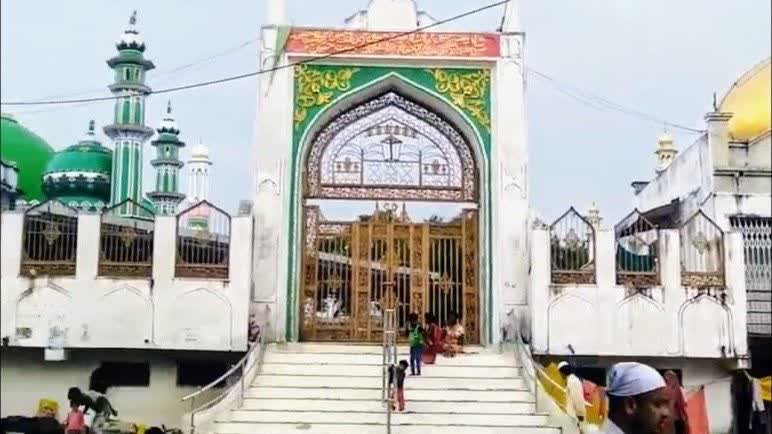
Some Shiites of India speak about their Arbaeen journey to the “Jaura” region and the symbolic shrines of “Husayn Tekri,” which is a fascinating story. Even many Iranian Muslims residing in India travel to this region for the Arbaeen of the Master and Lord of the Martyrs and his loyal companions, and stay there for several days for mourning, feeding, and fulfilling vows.
“Husayn Tekri” is a complex of symbolic shrines and holy mausoleums located on the outskirts of Jaura city in the Ratlam district of Madhya Pradesh state, India. In this complex, one can observe and visit the symbolic holy mausoleums (shahadatgahs) of six noble figures of the AhlulBayt of the Prophet (p.b.u.h.): Imam Ali ibn Abi Talib (a.s.), Imam Husayn (a.s.), Abbas (a.s.), Fatimah al-Zahra (s.a.), Zaynab (s.a.), and Sakina (s.a.).
According to the Cultural House of Iran in Mumbai, “Husayn Tekri” annually witnesses the presence of a large number of pilgrims from every religion and sect, including Shiites, Sunnis, and Hindus, and among them, one can see patients who have lost all hope and have taken refuge in the noble shrines attributed to the AhlulBayt (a.s.).
Also, among this vast crowd, one can observe some individuals who have been tormented and exhausted by black magic, and upon entering this holy place, they begin performing strange and unimaginable movements, which can be seen in many clips available on social media.
*History of “Husayn Tekri”
According to historical evidence and accounts from well-known individuals and personalities, in 1886 AD, two historical events—one being “Dussehra” belonging to Hindus and the other being the Ashura of Imam Husayn (a.s.)—coincided and overlapped. Both groups were moving through the area in processions to perform their rituals. However, that year, tensions arose between Hindus and Muslims. News of this tension reached the Sultan of the region at that time, “Ihtisham Ismail Khan Bahadur,” and he went to the area to prevent chaos. After investigations, he concluded that it would be better for the Hindus to move their processions first and leave, and afterward, the Muslims and Shiites could mourn and perform their rituals.
At midnight, when the people of both groups were heading home, they heard the neighing of a horse and saw a green-clad rider upon it. The people witnessing this event were astonished and frightened. The next day, they saw that in the place where the horse’s hooves had struck, a refreshing spring of pure water had flowed, feeding three ponds.
According to the testimony of the residents, there had been no spring in this area before. Sick residents drank from this spring and were healed of their ailments. After this event, news reached the Sultan, and he came to the area again. Witnessing this scene, he ordered the construction of symbolic mausoleums in the style of those in Iraq, and construction began. Within two years, the entire area was developed and now welcomes many pilgrims from all religions, sects, and creeds. There is also a cemetery in this area where “Ihtisham Ismail Khan Bahadur” is buried.
*Mourning and Cooking Votive Food
The symbolic shrines of “Husayn Tekri” are always open throughout the year and provide services to pilgrims. From the beginning of Muharram to the end of Safar, especially on Arbaeen, a large number of people flock to this area, and among them, resident Iranians can be seen cooking and distributing votive food (Nazr) for the pilgrims.
At this site, in addition to mourning and chest-beating, another form of mourning is observed in the form of fire-walking. A trench about three meters long and shallow is dug. After dry firewood is burned and the fire subsides, pilgrims run over the fire shouting “Labbaik Ya Husayn (a.s.)” and ask their Imam and Master to intercede for them and save them from the fire of hell.
According to some members of the board of trustees of the “Jaura” Cultural Heritage Foundation, at this site, every day at noon throughout the year, votive food is distributed among two thousand people. The cost of this votive food is covered by a woman from the city of Hyderabad, India. Apparently, her factories went bankrupt years ago, and she made a vow that if her work flourished again, she would cook and distribute food for two thousand people daily.
“Husayn Tekri” is administered by a board of trustees, all of whose members are reportedly Sunni. At this site, large sums of money from around the world are allocated annually for development and services to pilgrims. So far, no document has been published regarding its funds and revenues.
*Pilgrimage for Healing and Freedom from Black Magic
Many individuals and pilgrims who come to this site are those suffering from incurable diseases whom doctors have given up on, and alongside them are people who have been affected by black magic. It should be noted that black magic and fortune-telling thrive in India, and many seek to achieve their desires through this means. Behind the symbolic shrine of Abbas (a.s.), there is a pond where such individuals perform ritual bathing (ghusl).
To reach “Husayn Tekri,” one must obtain a train ticket to “Ratlam Station,” and upon arrival, one can reach Husayn Tekri by bus or other means of transportation.
Short link
Questions and Comments