
🏴 Husayni Mourning Around the World – 2026
🌐 119. Germany:
Ashura International Foundation / Husayni Mourning News – July 15, 2026:
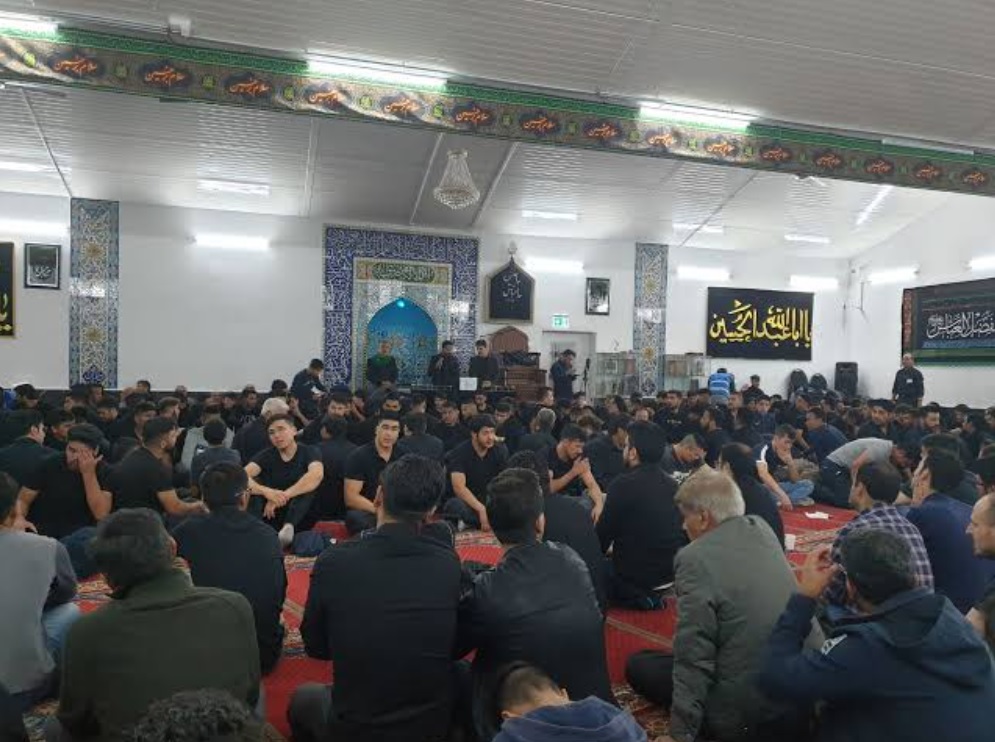
Concurrent with the days of Muharram mourning, Afghan immigrants residing in Germany held mourning ceremonies for Imam Husayn (a.s.) and his companions.
In Germany—as one of the largest Afghan immigrant communities in Europe—Muharram ceremonies are held regularly and annually in cities such as Berlin, Hamburg, Frankfurt, Munich, and Leipzig.
These religious centers host a large gathering of immigrant families and those interested in Ashura rituals every year. In some mourning programs, in addition to Afghan immigrants, German citizens who are interested in the culture of immigrants also participate.
Among these centers, the mourning delegation “Muntaziran-e Zuhur” (Those Awaiting the Reappearance) in Berlin is one of the groups that, in addition to holding mourning ceremonies, also engages in various religious occasions and, by setting up cultural processions (mawkibs) and offering hospitality, provides opportunities for greater interaction with European citizens.
Also, in the city of Leipzig, the “Rasul Akram (p.b.u.h.) Husayniyyah” is considered one of the active centers of Afghan immigrants in holding traditional Muharram rituals.
These programs are accompanied by hospitality, votive offerings (Nazr), and family gatherings, and contribute to the revival of religious and native traditions.
In other European countries as well, Islamic centers and registered Husayniyyahs, in compliance with local laws, regularly hold programs for the ten days of Muharram and religious occasions, and in some cases, host European citizens and those interested in learning about the culture and message of the Ashura movement.
A notable point regarding Husayniyyahs and religious centers is that these centers are not merely places for holding mourning ceremonies, but also help families transmit a part of their religious and cultural identity to subsequent generations, and alongside other immigrants, preserve a part of their identity and authenticity.
Furthermore, holding such ceremonies facilitates the transmission of the values of the Ashura movement to new generations and strengthens social bonds within the immigrant community.
Short link
Questions and Comments