🏴 Husayni Mourning Around the World
🌐 Egypt
Ashura International Foundation / Husayni Mourning News:
Among the customs of Egyptians during Muharram, especially in the first ten days and on Ashura, is giving charity to the poor, known as “Sadaqat al-Ashr” or “Zakat al-Ashr.”
Many Egyptians fast on Ashura in commemoration of Prophet Moses (a.s.) being saved from the tyranny of Pharaoh.
*Ashura Among Twelver Shiites and Isma’ili Bohras:
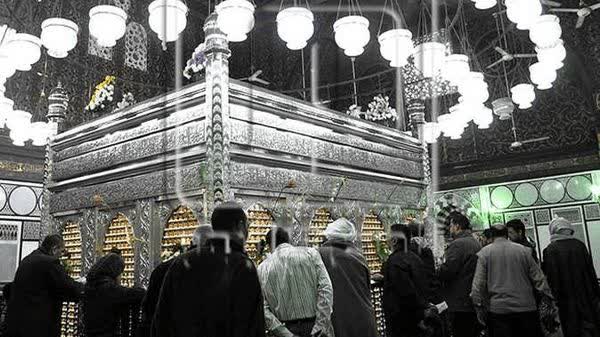
No public ceremonies have been observed, but mourning gatherings have been and continue to be held in the homes of some Twelver Shiites. Unfortunately, precise statistics on these private gatherings are not available. Typically, on Ashura, Shiites individually go to the “Maqam Ras al-Husayn (a.s.)” (the Shrine of Imam Husayn’s Head) in Cairo, where they recite the Holy Quran and supplications. After that, they visit the shrines of Sayyidah Zaynab (s.a.), Sayyidah Nafisa, or other AhlulBayt (a.s.) shrines. Isma’ili Bohra Shiites also hold mourning ceremonies in their private gatherings, but apart from members of this sect, others cannot attend their gatherings. Additionally, no ceremonies are held in Egypt on Arba’een.
*Ashura Among Sufi Orders:
However, Sufi orders hold public ceremonies on Ashura in mosques or in tents set up near the shrines of AhlulBayt (a.s.) and saints. The speaker at these ceremonies usually speaks about the life of Imam Husayn (a.s.), after which Sufi circles of dhikr (remembrance of God) are formed. Some individuals also engage individually in Quran recitation, dhikr, and sending blessings upon the Prophet (salawat). Each Sufi order has its own specific dhikr practices. At the end of the ceremony, attendees are served food spread out on tables in the mosque, tent, or shrine. The ceremonies of Sufi orders do not have the atmosphere of mourning and differ from Twelver Shiite mourning; they are more celebratory and joyful in nature.
Throughout the year, three times, the “Mawlid al-Husayn (a.s.)” (Celebration of the Birth of Imam Husayn) ceremony is held in a grand gathering by 77 Sufi orders, with tents set up in the spaces around the “Maqam Ras al-Husayn (a.s.)”:
– The last Tuesday of Rabi’ al-Thani, on the occasion of the arrival of the holy head (of Imam Husayn) from Ascalon to Cairo.
– The third day of Sha’ban, on the occasion of the birth of Imam Husayn (a.s.).
– Ashura, on the occasion of the martyrdom of Imam Husayn (a.s.).
*Ashura Among the General Public:
According to Sunni teachings, many Egyptians fast on Ashura in commemoration of Prophet Moses (a.s.) being saved from the tyranny of Pharaoh. The special food consumed at sunset as the breaking of the fast on this day is called “Ashura.” Among the customs of Egyptians during Muharram, especially in the first ten days and on Ashura, is giving charity to the poor, known as “Sadaqat al-Ashr” or “Zakat al-Ashr.”
*Government Restrictions on Ashura:
Every year before Ashura, Egypt’s Ministry of Endowments (Awqaf), under the pretext of preventing sectarian strife (conflict between Salafis and Shiites), implements specific measures regarding the “Maqam Ras al-Husayn (a.s.).”
On Ashura in 2015, by order of the Ministry of Endowments, the doors of the “Maqam Ras al-Husayn (a.s.)” were closed, and the prayer hall was only opened to the public during obligatory prayer times. The ministry’s directive was met with widespread negative reactions from Shiites and Sufis, sparking a wave of anger and protest in Egyptian society.
A group of Sufis gathered in front of the closed door of the mosque in protest, and a representative of Al-Azhar appeared among them, apologizing and stating that the decision was not from the Endowments Ministry but had been taken by Al-Azhar to protect Egypt’s national security. Strict security measures were enforced around the “Maqam Ras al-Husayn (a.s.).” Sufi orders gathered behind the closed doors of the mosque, keeping the occasion alive by reciting poetry and special dhikr. The Minister of Endowments had stated that the mosque is a place for prayer and worship, not for holding religious ceremonies.
The media reaction to this action was intense, accompanied by widespread responses from Shiites and devotees of the AhlulBayt (a.s.) in the media and press.
Khaled Montaser wrote in his column in Al-Masry Al-Youm: “The closure of the Maqam Ras al-Husayn (a.s.) is proof that Shimr has not yet died and still lives among our brains.”
Al-Sayyid Naeem wrote in his column: “Endowments officials claim that the number of Shiites in Egypt is less than the fingers of one hand, and it is strange that out of fear of this small number of Shiites, they have closed such a large and important mosque. It would be better for the Minister of Endowments and his deputy to return to their homes and not remain in these positions.”
Farouk Gouida wrote in his column in Al-Ahram, “Al-Husayn belongs to all of us,” and criticized the Endowments Ministry’s decision to close the “Maqam Ras al-Husayn (a.s.)” on Ashura.
Nahla al-Nimr wrote in her column in Al-Wafd, titled “Al-Husayn, the Imam of Sunnis and Shiites,” stating: “Many Sunnis believe that Husayn (a.s.) is not exclusive to Shiites but belongs to all of humanity and all the free people of the world.”
The criticisms were accompanied by calls for the replacement of the Minister of Endowments. The column “No… O Minister of Endowments” was a clear example of these criticisms.
In subsequent years, the restrictions were gradually reduced, and only the area of the holy shrine itself was closed. Today, on Ashura, all parts of the “Maqam Ras al-Husayn (a.s.),” including the shrine, are open to those who wish to visit. However, before Ashura, the Ministry of Endowments issued a notice warning Salafis and Shiites to refrain from holding any specific Shiite ceremonies or engaging in confrontations within the spaces of the “Maqam Ras al-Husayn (a.s.).” No particular incidents occurred, and, of course, no mourning ceremonies or gatherings were permitted to be held.
The Salafi group “Coalition for the Defense of the Companions and the Prophet’s Household” engages in media and legal activities against Shiites, enjoys the support of specific government institutions, and constantly threatens to prevent Shiites from mourning on Tasu’a and Ashura at or in front of the “Maqam Ras al-Husayn (a.s.).”
Short link
Questions and Comments