🏴 Husayni Mourning Around the World – 2026
🌐 90. China:
Ashura International Foundation / Husayni Mourning News:
China, as an ancient civilization, has always been receptive to external intellectual and spiritual currents. Islam entered China in the 7th century AD (during the caliphate of Uthman and subsequently Amir al-Mu’minin Ali (a.s.)) through two main routes: maritime (via the ports of Canton) and overland (the Silk Road). With the arrival of Islam, Shiite culture and devotion to the AhlulBayt (a.s.), though in the minority, also took root sustainably in this land.
*Historical Background of the Presence of Shiite Muslims in China
Today, China has approximately 23 million Muslims, the vast majority of whom are Sunnis. However, the history of Shiite presence in China is older than being limited merely to contemporary minorities.
*Tang and Song Dynasties:
Persian and Arab merchants who came to Chang’an (present-day Xi’an) via the Silk Road were the first heralds of Islam. Many of these merchants came from regions where love for the AhlulBayt was prevalent
*Yuan Dynasty (Mongol Period):
During this period, there was a large-scale migration of Muslim artisans and scholars from Iran and Central Asia to China. The presence of Iranians in Kublai Khan’s court paved the way for the influence of Shiite culture, including limited Rawda-khwani (eulogy recitations) for Imam Hussein (a.s.), in private circles. The Muslim quarter of Niujie in Beijing, which dates back to this era, still bears traces of this spiritual heritage.
*Ashura in Contemporary China: From Ritual to Academia
In today’s China, Ashura rituals are primarily observed among three groups, with the third being the most noteworthy:
*Tajik and Kyrgyz Muslims (Xinjiang Province):
In western China, in the Xinjiang Uyghur Autonomous Region, a minority of Tajik and Pamiri Muslims follow the Isma’ili sect (a branch of Shiism). They venerate Imam Hussein (a.s.) as their third Imam. Their ceremonies differ from the passionate rituals of the Middle East and are often accompanied by mystical poetry and local eulogies (Madda).
*Hui Muslims:
The Hui are the largest Muslim group in China and are predominantly Hanafi in jurisprudence, but in their popular culture, special respect for the AhlulBayt (a.s.) is evident. In some historical mosques, such as the Great Mosque of Xi’an (which combines Chinese and Islamic architecture), stone inscriptions bearing the name “Hussein” exist, indicating historical reverence for this figure.
*Academic Community and Non-Muslim Elites (Modern Phenomenon):
The most astonishing aspect of Ashura’s influence in China is the appeal of Imam Hussein’s (a.s.) character to non-Muslim Chinese intellectuals and writers.
*Literature and Communist Discourse:
In recent decades, Chinese writers and translators have viewed Imam Hussein (a.s.) through a humanistic and revolutionary lens. His uprising has been translated and interpreted not merely as a religious event but as a “red revolution against Umayyad despotism.
*Translation of Novels:
Chinese translations of books such as the novel “Eternal Light” (about Lady Zaynab (s.a.)) or analytical works on Karbala are sold in the book markets of Beijing and Shanghai, and their readership is not necessarily Muslim but rather young people interested in the philosophy of resistance.
*Symbolic Analysis: Why is Imam Hussein (a.s.) Understandable to the Chinese?
The success of Ashura’s message in penetrating the intellectual strata of Chinese society is rooted in shared values:
*Loyalty:
Imam Hussein’s (a.s.) loyalty to the truth and his covenant with God and his grandfather (p.b.u.h.) aligns perfectly with the virtue of “keeping one’s word” in Chinese culture.
*Sacrifice:
Chinese culture places great value on “self-sacrifice for the collective.” The story of the thirst of the infants and the sacrifice of Ali Akbar (a.s.) is familiar and respected to the collective conscience of the Chinese.
*Justice-Seeking:
In ancient Chinese political thought, if an emperor violated the “Mandate of Heaven,” the people had the right to rise up. In the view of Chinese analysts, Yazid is a clear example of a ruler lacking legitimacy, against whom Hussein (a.s.) stood.
*Challenges and Limitations
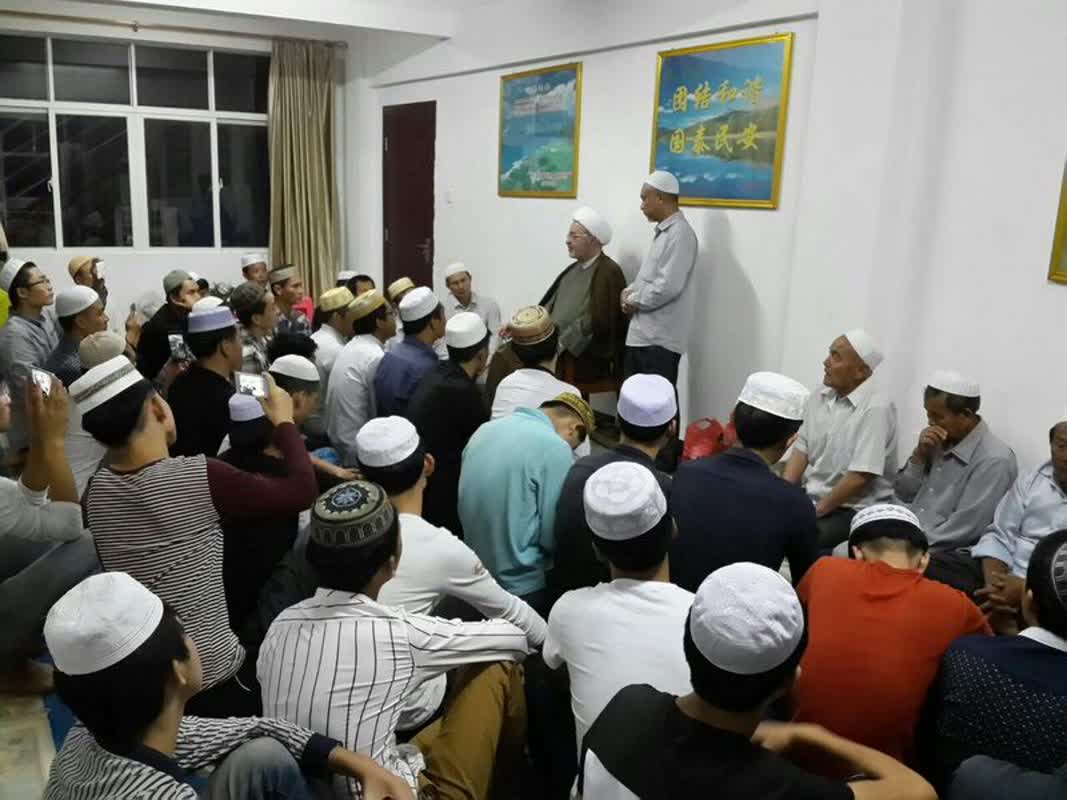
Naturally, the free and passionate holding of mourning ceremonies in the manner common in Iran or Iraq is not feasible in China, given the country’s public order laws and religious policies. Ceremonies are limited to within historical mosques and are held within the framework of legal regulations. Nevertheless, the movement to introduce Husayni thought through books and universities has opened a more sustainable and profound path for this universal message.
Imam Hussein (a.s.) in China is no longer merely a “foreign Shiite Imam” but has become a global literary and philosophical symbol of the fight against oppression. The trajectory of this message’s movement—from the caravans of the Silk Road to the study halls of modern Chinese universities—demonstrates that “Karbala” is not a geography but a culture.
The future of the interaction between China and Ashura lies not in outward rituals but in ethical and humanistic discourse, and it can serve as a solid bridge for dialogue among civilizations.
Short link
Questions and Comments