🏴 Husayni Mourning Around the World
🌐 Bangladesh:
Ashura International Foundation / Husayni Mourning News:
Bangladesh is a country in South Asia, east of India, with its capital at Dhaka. Formerly known as “East Pakistan,” it became an independent nation following the Bangladesh Liberation War on March 26, 1971, with the assistance of India, separating from “West Pakistan” (present-day Pakistan).
89.7% of Bangladesh’s population is Muslim, the majority of whom are Sunni, while 9.2% follow Hinduism. Since Islam was historically spread in Bangladesh through Sufis, followers of Sufi orders, as well as those identifying as “Deobandi” and “Ahl-e Hadith” (who follow the Hanafi school), have a significant presence in the country.
Muharram is observed every year with fervor in various parts of the world, including Bangladesh. However, this year, as this occasion coincides with days when the devotees and lovers of Imam Husayn (a.s.) are holding Husayni rituals differently from previous years—implementing health measures and protocols in these gatherings—some have also chosen an atmosphere to commemorate the Ashura rituals. In past years, the Muharram rituals in this low-lying Asian country have had a special atmosphere, and the traditions of the Bangladeshi people in this regard have been noteworthy. Among these traditions, the following are recorded:
*Names Derived from Husayn (a.s.)
From the advent of Islam in the land of Bangladesh to the present day, many children have been named with the blessed name of Imam Husayn (a.s.). Fathers and mothers have named their children in such a way that the name Husayn appears in the composition of names, such as: Alauddin Husayn Shah, Shahadat Husayn, Sajjad Husayn, Husayn Ali, Munir Husayn, Anwar Husayn, Zakir Husayn, Ershad Husayn, Musharraf Husayn, Abul Husayn, and Fida Husayn.
Similarly, many children have been named after the sons of Imam Husayn (a.s.), including: Zayn al-Abidin, Ali Asghar, Ali Akbar, and others. Sakina, Zaynab, and Fatimah are also chosen for girls in connection with the Karbala event. The tragic event of Karbala, Ashura, and the martyrdom of Imam Husayn (a.s.) and his companions are deeply ingrained in the minds and thoughts of the Muslim people of Bangladesh, forming a part of popular beliefs and the religious culture of Bangladesh. It is through these factors that the true identity of Bangladeshi culture is shaped.
*Music
Every year, the people of Bangladesh hold Muharram mourning ceremonies with unique passion and emotion. Ta’ziyeh (passion plays) are performed every year during Muharram in all the villages of Bengal with great fervor.
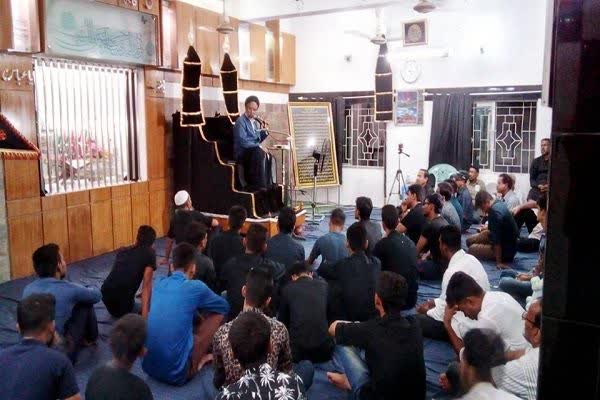
On the occasion of Muharram and Ashura, various social and cultural organizations and associations organize seminars, gatherings, religious lectures, prayer and supplication sessions, and gatherings for sending blessings upon the Prophet (p.b.u.h.). Special sessions and gatherings are held in mosques, shrines, and khanqahs (Sufi lodges). Newspapers and magazines publish articles and poetry on the occasion of Muharram and Ashura. Exhibitions are also set up in some places to mark Ashura and Muharram. Radio and television broadcast special programs, though these programs are aired without music. In the Ashura and Muharram ceremonies, there is a revolutionary spirit flowing through the culture of this land.
*Muharram in Bengali Literature
Muharram also holds a special place in Bengali literature. In past decades, the epic novel “Bishad Shindhu” (Sea of Sorrow) by Mir Musharraf Husayn, published in three volumes in 1885, 1887, and 1891, reflects the sentiments surrounding this event. The contents of this book, rather than being based on documented and authentic narrations, are inspired by an emotional and sentimental atmosphere, and according to some, are somewhat unrealistic, potentially misrepresenting the objectives and motivations of Imam Husayn’s (a.s.) movement. The spirit of Muharram is also prominently present in the writings and poems of “Nazrul Islam,” the national poet of Bangladesh. He was not a Shiite, but in his poetry, respect and affection for the AhlulBayt (a.s.) are always felt. Kazi Nazrul Islam, in his epic work on Muharram, powerfully portrayed the sacrifice of Imam Husayn (a.s.), his oppression, the brutality of his enemies, and Yazid, using vivid imagery.
*Ta’ziyeh Recitation or Passion Play (Shabih Khwani)
Ta’ziyeh recitation is another manifestation of Islamic culture in this country. Passion plays, or as commonly known, Shabih Khwani (reenactment), are performed in various regions of Bangladesh, especially in “Manikganj.” The “Manikganj” ceremony on Ashura has a history of over a hundred years, and its custodian is one of the great Sufis of that region, who every year on this day feeds all the mourners.
People from neighboring cities, in the form of delegations and processions, make their way to the Husayniyyah (Imambarah) of this city, and the ceremony continues from sunrise until sunset. Although several deviations can be observed in it, stemming from a lack of awareness regarding the true nature of Ashura and the objectives and lessons of Imam Husayn’s (a.s.) uprising.
In the history of Bangladesh, under the influence of Shiites and the subsequent impact on the people, special ceremonies for observing Ashura—such as Ta’ziyeh processions and Imambarahs (Husayniyyah houses, like the Dalal Imambarah)—have emerged, which are still prevalent today, demonstrating the religious influence of Shiism in Bangladesh.
In 1609 AD, the city of Dhaka became the capital of Bengal Province (under the Mughal Empire in the Indian subcontinent) and was known as “Jahangirnagar” (City of Jahangir). From the outset, Jahangirnagar came under the influence of Shiite beliefs, and by holding Ashura ceremonies, this influence became more apparent. In old Dhaka, there is the oldest Imambarah called “Husayni Dalal,” whose architecture is influenced by Bangladeshi cultural traditions.
Another Imambarah was built by Haji Mohammad Mohsen, known for his “charity and generosity,” in a place called “Murali” in the Jessore district (located in western Bangladesh), which still remains. Additionally, in the Kharaki area of Jessore district, there is a place known as “Karbala.”
Muharram mourning ceremonies in Bangladesh, centered around the “Husayni Dalal” in Dhaka, are also held in various other cities, such as: Gazipur, Jessore, Bogra, Mirpur, Mohammadpur, Chittagong, Polton, Beit Bazar, Sadkhira, and Kochulo, among others.
The “Husayni Dalal” ceremony is influenced by the cultures of India and Pakistan. In other centers, the ceremonies are conducted in Bengali, sometimes with minimal facilities but with indescribable sincerity.
*Publication of Articles in the Press
The Bangladeshi press also dedicates articles and topics to Muharram and the uprising of Imam Husayn (a.s.) every year. The views expressed on this subject vary greatly, and in some cases, they spark theological debates. Examining Imam Husayn’s (a.s.) uprising and the Ashura movement from religious, humanistic, and even national perspectives forms the main theme of these articles, with writers using their intellectual frameworks to support this movement and defend it. Of course, some content is also published by supporters of the Wahhabi current, aimed at undermining and questioning the mourning ceremonies and rituals.
Overall, Muharram ceremonies are held in Bangladesh every year with grandeur and magnificence, and a notable point in these ceremonies is the presence and participation of the Sunni majority. Therefore, more attention should be paid to this, and with a closer examination, it should be considered how Imam Husayn (a.s.) serves as a unifying figure for the people of Bangladesh.
Short link
Questions and Comments